Why I believe In Photo Editing
- Mar 10, 2016
- 4 min read
When you wake up for school or work, do you just get up and go? No of course not. You hopefully take a shower, put on those new jeans, that stylish shirt, and do you hair to look your best. The same thing applies to photo editing. I am an amateur photographer. If I am trying to sell an image, I am going to make my work look as best as it can.
My contention is that photo editing should be considered an acceptable photographic technique. Photo editing does not replace ones photographic skills but instead is a tool to enhance, correct or finesse your image to your own artistic view.
Great art is not about realism but instead about causing the viewer to think and feel. A piece of artwork can elicit powerful emotions, feelings and even convey the artist’s point-of-view. To suggest that editing photos is an unacceptable practice because you are altering the original image and making it less realistic is similar to suggesting surreal or impressionist art lacks merit. The painting I have taken fromhttp://rhads.deviantart.com/art/Beautiful-World-454654081 is truly incredible. This is a prime example of how art does not have to be realistic to be impressive and moving. The same thing applies to photography. I find this photograph especially powerful because it has an emotional appeal and causes me to consider the world differently.

Photographic technology is becoming more accessible. Techniques to differentiate your photographs are essential to be a successful artist. Since the introduction of the digital camera, photography has become so much more competitive. The barriers to entry for a photographer have never been lower. Impressive digital cameras and smartphones with powerful microprocessors and embedded cameras are mass produced and available at a price point that is accessible to most people. Fifty years ago a camera was a novelty, but now everyone is a photographer. Social media makes the world even smaller. There are thousands of people sharing content and similar subject matter. It is hard to find a novel lake, or mountain or vista. The best artists and the best photographers look for ways to make their images stand out. I feel the best way to do this is to edit images and add one’s own creative twist using tools such as Adobe Lightroom and Adobe Photoshop.
We should also accept photo editing for the same reason that all art continues to evolve and change over time. For example, the ancient Egyptians used dyes created from various vegetables to add colour to their hieroglyphics. Another example can be found in the music industry, where digital music has taken over analogue music. Many of the songs that you hear today on the radio or download to your music player are either digitally enhanced remixed or dubbed over older songs. Here, the use of technology and the enhancement of songs have undoubtedly added to the artistry. Similarly the technology of photography has also evolved from sepia to colour and film to digital. Therefore, photo editing is a natural progression of the art form.
Traditionalists have argued that photo editing is unnecessary. Not surprisingly, I wholehearted disagree with this proposition. Before the magic of photo editing, red-eye and over-exposure might ruin a great picture. I recently spoke with an event photographer who said one of his worst enemies was the dreaded “white table cloth”. When he was trying to shoot a group sitting around a table with a white tablecloth, it would frequently ‘throw-off’ his white balance. The camera had to decide between the tablecloth or the faces of the subjects, so the table was either perfect but the faces were too dark or the faces were perfect but the table was ‘blown-out’. Luckily photo editing has allowed him to adjust this in post-processing. Here, once again is evidence that photo editing makes photography better!
Photo editing also has an important impact on landscape photography. Before I even explain the two pictures below, I am sure one of them already stands out. Which one would you rather hang on your wall? My guess is you prefer the image on the left. Using a photo editing tool, I was able to embellish the saturation. This is not a replacement of photographic technique as I believe the right image is still a good photograph. In making the scene more vibrant, it brought out the images full potential.
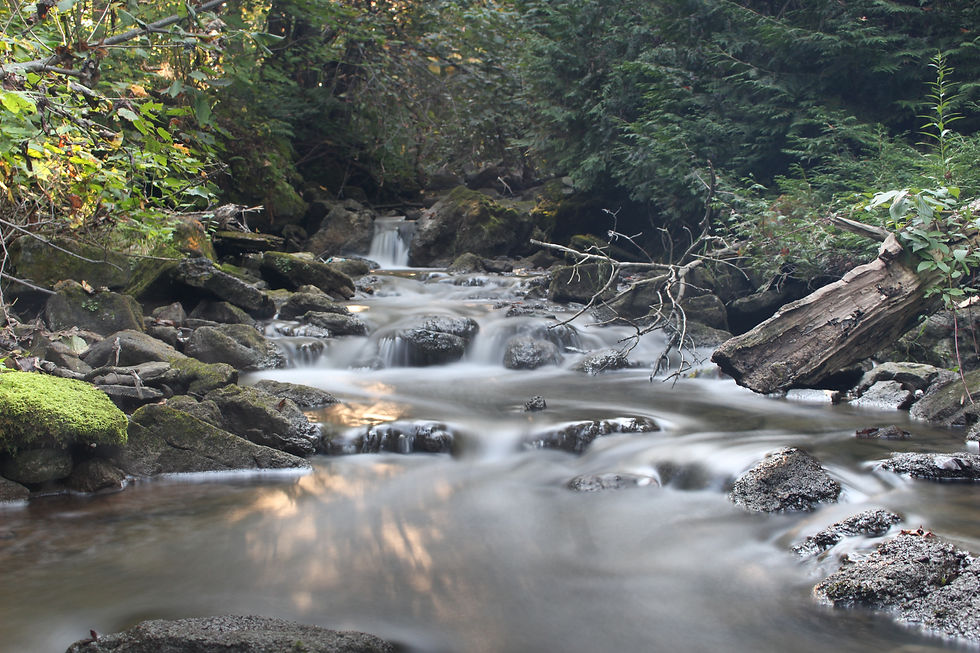

Below is another image I took titled “Mystic Thaw”. I have have changed the tint and the temperature to add a “mystic” feel to the image. Realistically this scene would not have these magenta and turquoise colours, but again with an editing software, I was able to enhance this image and add my own creative twist. With software such as Adobe Photoshop and Lightroom, you can paint a picture in your own image to make it creative and unique. It is really no different than using neutral density (ND) filters or polarizers to change or enhance your image. Just like editing, these filters can be used to take the glare off of the water, make blues incredibly blue and brighten the whites. ND filters also allow you to slow the shutter speed for a technique to make waterfalls have a beautiful milky flow. I have even seen filters which can add fog to an image. Almost every photographer carries a polarizer and at least a few different stops of ND filters and ND graduated filters

The question remains, why is this acceptable, yet doing the same thing on a computer is not? I feel it is a personal decision for the artist. It depends on your own tastes and how far you decide to take it. In my opinion is this really no different from the artistic latitude that Claude Monet took when he painted his famous “Water Lilies”. These water lilies are neither realistic nor especially accurate, but his painting is undeniably beautiful and a true work of art!
In conclusion, photo editing is really no different than developing and editing this essay or really any type of artist endeavour. This essay started with an idea, evolved into a rough draft, and after multiple edits I produced a final product that I hope is unique and worthy of an audience. Similarly, artistic style can be displayed through people’s edits, and can separate an image from others based on the digital enhancements or de-hancements to finalise their photograph. I am convinced that photo editing is not only acceptable but also necessary and beneficial to photographic art.
Comments